


I’ve watched many business owners try to fix problems by chasing symptoms. When sales dip, they offer discounts. When processes slow down, they buy new software. For a little while, it can feel like progress. But soon enough, new issues flare up, and it feels like a game of whack-a-mole. The real problem isn’t a lack of effort. It’s that the foundation is weak—and that’s why you need a small business consulting framework that gets back to the basics.

This pattern became clear to me over years of work across different industries, from my first business to consulting roles. I saw good people in good companies burn out because they were layering fixes on top of fundamental cracks. Everyone wanted to build a great culture, but they misunderstood what that required. They talked about values but missed the basics. That’s why I developed the Back to Basics approach. It’s not a new concept or jargon; instead, it’s a simple, proven sequence that works. 

Stop Treating Symptoms and Start Building a Foundation

Small Business Consulting Framework Back to Basics_PBS6

After selling my first company, I spent years observing what truly makes a business succeed or fail. I saw the same issues appear in the same order, regardless of the company or industry. Leaders pushed for growth before ensuring stability. Departments worked in silos, and teams ran hard but then argued about direction. 

The common response was always to treat the immediate pain. But if your operations are messy, your financial reports will be a blur. If marketing promises what fulfillment can’t deliver, your customers lose trust. These aren’t separate problems but are all symptoms of a weak foundation. 

I realized that many leaders talked about culture, but their actions told a different story. They would preach integrity in a meeting, then cut corners to hit a target. Culture isn’t a poster on the wall; it’s what people see you do under pressure. The root of the issue often came down to leadership. Many leaders lacked the self-awareness to lead effectively. Without understanding their own strengths and weaknesses, they couldn’t build an intentional culture.
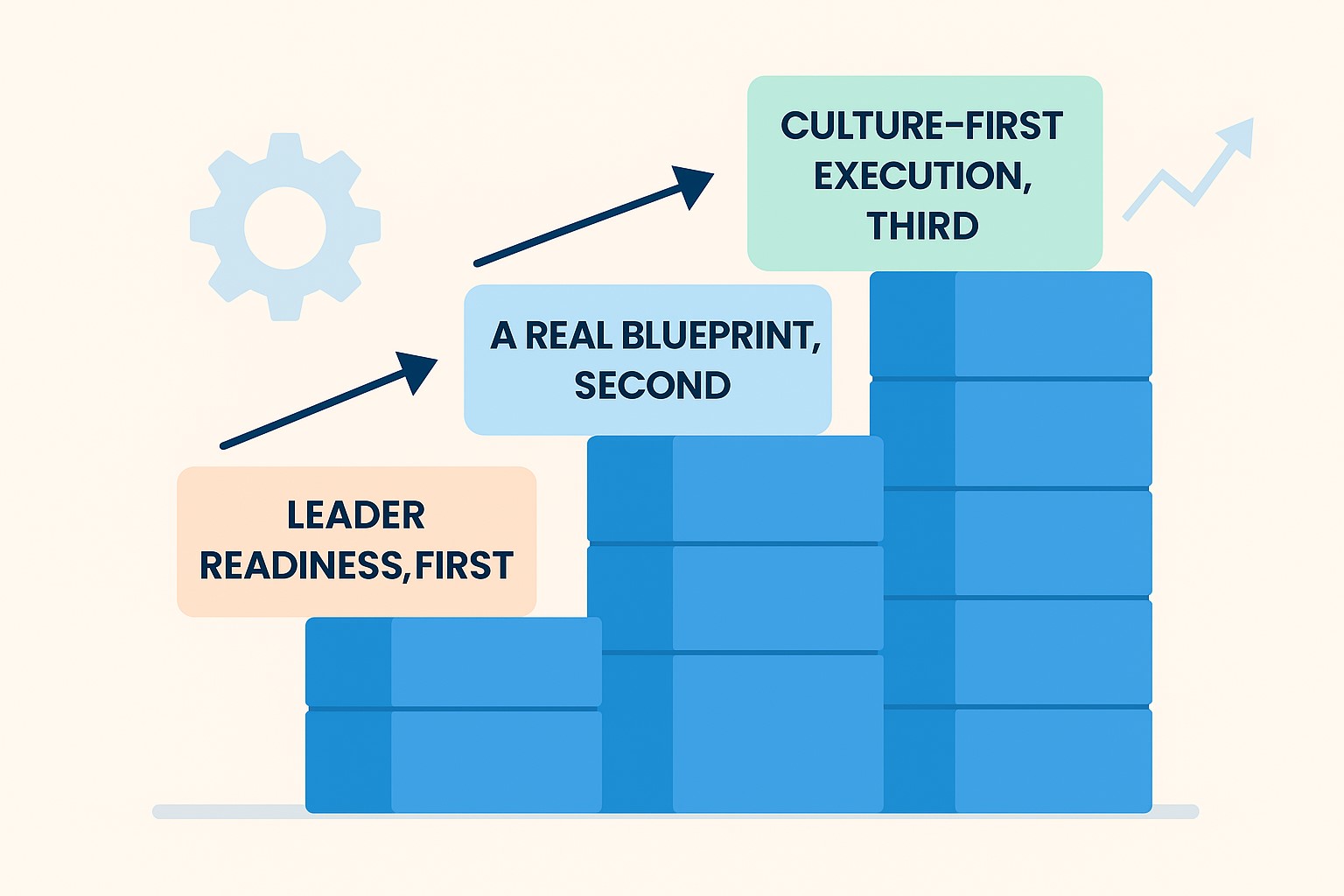
A Small Business Consulting Framework, in the Right Order

Back to Basics is intentionally simple. It’s not unproven ideas, buzzwords, or complicated jargon. Instead, it provides the foundational order that ensures your business grows steadily without breaking. This core principle is the foundation of PBS’s system, which we refer to as Back to Basics: The Palermo Method™. 

  1. Leader readiness, first
    If a leader isn’t clear about their strengths, weaknesses, and core values, everything else becomes unstable. Being ready means knowing your values, being honest with yourself, and staying steady emotionally to make good decisions. This is what we call The Return Path: Leadership Readiness by Design™. It begins with the person, not a plan.
  2. A real blueprint, second
    Clarity requires a well-structured approach: clearly defined roles, standards, workflows, and metrics that reflect real-world practices. This is precisely where PBS Business Blueprinting™ fits within our small business consulting framework. A robust blueprint aligns culture, operations, sales, and finance, ensuring smooth handoffs and a clear P&L. The goal is to simplify execution, making processes efficient rather than merely presentable.
  3. Culture-first execution, third
    Now you run the system. Hire and coach according to the values you truly live by. Keep SOPs concise and frequently used. Let tools support the process, not dominate it. Sales grow when service and fulfillment are prepared, ensuring customers receive what you promised. That’s how quality sustains and cash flow remains steady. This exemplifies the Palermo Synergy Framework™ in action.

If this looks obvious, that is the point. Across industries and roles, the same order held up: ethics and behavior first, then structure, then scale. When I kept that sequence, teams calmed down, handoffs tightened, and the numbers started making sense again. When I skipped it, I paid for it later. 

You can’t scale what you haven’t structured. And you can’t structure what you don’t lead.

Why the Basics Matter Now More Than Ever

Businesses usually don’t collapse all at once. The true cost of neglecting the basics appears gradually and wears people out. Leaders experience burnout. Money is wasted on solutions that never last. Teams lose trust when leaders say one thing and do another, and customers quietly leave because promises don’t match what’s delivered. 

A strong foundation changes all of that. When values are clear and structure is in place, decisions stop feeling like guesswork. Teams pull in the same direction instead of against each other. Growth shifts from unpredictable to steady, and the business stops draining energy and starts giving it back. 

The clock is always running. Markets move quickly, tools change constantly, and pressure exposes the foundation you’ve built. If it’s patchwork, the cracks widen. If it’s grounded in values, structure, and culture, the same pressure proves your strength. That’s why getting back to the basics isn’t something to put off… It’s the work that makes everything else possible. 

Building Your Foundation for Sustainable Growth

Back to Basics: The Palermo Method™ is for owners who want stability and growth without the chaos. Lead first, plan with clarity, and execute with discipline. When those align, teams stop working against each other, customers get what they were promised, and the financials finally make sense. Growth doesn’t have to feel like a gamble… it can be steady, predictable, and worth the effort. 

Back to Basics: The Palermo Method™ graphic showing three steps—The Return Path: Leadership Readiness by Design™, PBS Business Blueprinting™, and Palermo Synergy Framework™. The flow highlights business strategy, cultural development, operations, sales, and financial health, all aligned through people, process, and systems.
Up Next: The Return Path in Practice 

The next article digs into leadership readiness, how to test your own footing, and sets the foundation so the basics take root. Simple, proven actions you can actually put to work.